

Chest Pain
Chest Pain Evaluation in Clear Lake City and Texas City

What Chest Pain Includes
Chest pain is a misleading name, so it helps to break it into its parts. Think of the chest as the area below your jaw and above the diaphragm, the muscle that sits under your lungs. Think of pain as any unwanted sensation in that area: dullness, heaviness, aching, tightness, squeezing, or numbness. Plenty of people describe what turns out to be a cardiac problem without ever using the word pain. Discomfort reported as “not pain exactly, more of a pressure” is a common presentation of a heart problem.
What Cardiac Pain Feels Like
The pattern that most concerns a cardiologist is discomfort tied to effort. Narrowed coronary arteries can carry enough blood at rest and fall short once the heart works harder. The NHLBI describes that predictable form as stable angina.1 Walking up a hill brings it on, sitting down settles it, and the same amount of effort brings it back tomorrow.
It is usually felt across the chest rather than at one fingertip-sized spot, and it travels: to the left arm, the jaw, the neck, or between the shoulder blades. Shortness of breath, sweating, or nausea alongside it raise the concern further.
Causes That Are Not the Heart
Many causes sit outside the heart. Reflux, a strained chest wall muscle, costochondritis (inflammation of the cartilage joining the ribs to the breastbone), pericarditis (inflammation of the sac around the heart), bronchitis, and anxiety all produce real discomfort there.
That doesn’t make the symptom safe to dismiss. Heart disease is the leading cause of death in the United States,2 and the cardiac and non-cardiac patterns overlap enough that the sensation alone does not separate them. The job of an evaluation is to tell the two groups apart with testing.
When to Book an Evaluation
Call 911 for the symptoms in the alert at the top of this page. Short of that, the pattern that should bring you in is a changing one:
- Getting more frequent.
- Getting more intense.
- Lasting longer.
- Coming on with less exertion than it used to.
Discomfort that has been mild and unchanged for months, with a clean workup behind it, is a different situation from something that started last week. Say which of the two you are describing when you call, because it changes how soon we see you. For the fuller breakdown of what needs 911, what needs an appointment, and what is usually not the heart, read our guide to chest pain and when to see a cardiologist .
How the Evaluation Works
The first visit answers 2 questions: whether this is the heart, and if it is, how quickly it needs acting on.
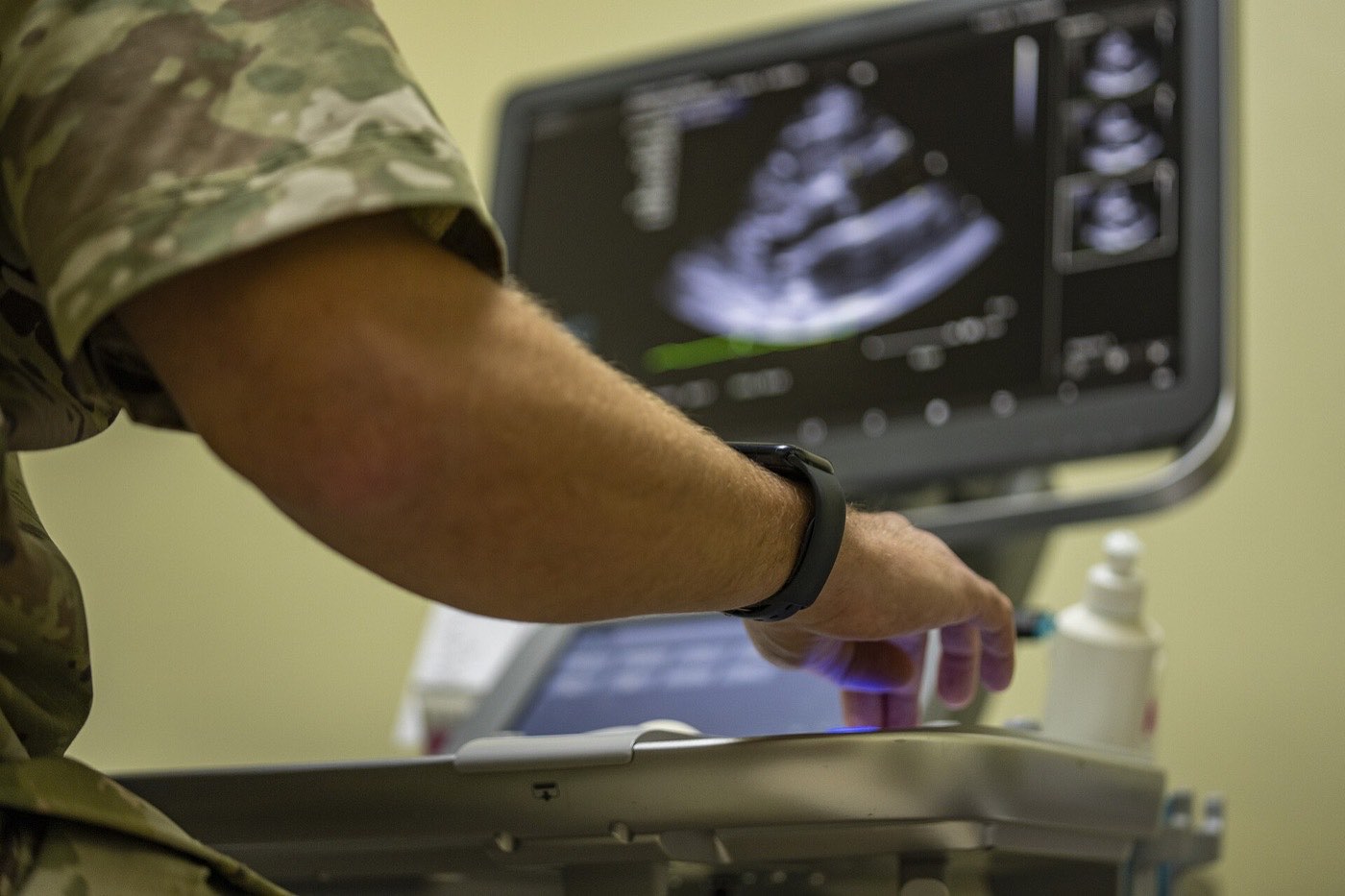
We start with the history and the examination. What you were doing when it started, how long it lasts, and what makes it stop separate the exertional patterns from the reflux and chest-wall ones before any test is ordered. Then the cardiac testing we do in the office :
- ECG, which records the heart’s electrical activity and can show a heart attack in progress or an old one.
- Echocardiogram, an ultrasound of the heart that shows the chambers moving, the valves working, and the pumping strength.
- Stress test, which looks at the heart under exertion, since a narrowed artery often behaves normally at rest.
- Coronary calcium score or cardiac MRI where the picture is still unclear.
Bring your medication list and any prior tracings or test results. Put beside an older tracing, a finding on today’s ECG can be dated rather than guessed at, and whether it is new changes what happens next.
We do the ECG, the echocardiogram, and the stress test in our own offices, in Clear Lake City and in Texas City.
What Happens If a Test Finds a Blockage
If the workup points to a blockage, the next step is usually diagnostic cardiac catheterization , a procedure that threads a thin tube through a blood vessel to the coronary arteries and injects dye to see where flow is restricted. Dr. Patel is a board-certified interventional cardiologist, so where it is clinically appropriate the catheterization and any stenting are done by the same physician who found the problem, rather than referred to another practice. A stent is a small mesh tube left behind in the artery to hold it open, placed through that same catheter.
Much of this never gets that far. Reflux, a strained chest wall muscle, and stable angina are usually managed without any procedure at all.
Prevention and Ongoing Management
Once the cause is known, the work is mostly risk-factor control: blood pressure, cholesterol, blood sugar, tobacco, weight, and activity. Those are the levers that change whether narrowing progresses, and high blood pressure and high cholesterol each have a page of their own. Keep a note of when episodes happen and how long they last, and bring it to follow-up. A pattern that is changing is what moves the workup forward.
Frequently asked questions
Common questions about chest pain evaluation.
What happens at the first chest pain appointment?
Do I need a referral to see a cardiologist for chest pain?
Can the testing and the treatment happen in the same place?
Which insurance plans do you accept?
Sources
- National Heart, Lung, and Blood Institute. Angina (Chest Pain): Types. Updated 2024. nhlbi.nih.gov
- Centers for Disease Control and Prevention. Heart Disease Facts. Reviewed 2025. cdc.gov
Header image: freestocks.org via Wikimedia Commons, CC0 1.0
Not Sure What Your Chest Pain Is?
Tell us what's going on, and we'll call you to set up a visit.
Most appointments are scheduled within 1 to 3 days.
(409) 945-5444Denotes a required field